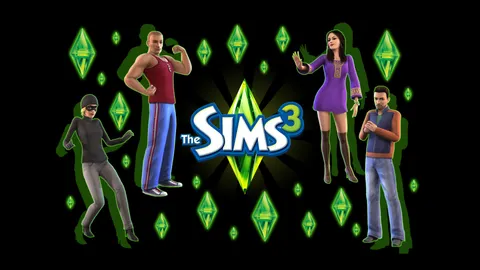
The Sims 3 is Maxis' 2009 social simulation game, expanding the series with an open neighborhood, personality traits, lifetime wishes, and deeper tools for shaping households, homes, and daily routines.
The Sims 3 was developed by Maxis and published by Electronic Arts in 2009 for Windows and Mac, with later versions appearing on consoles, handhelds, and mobile platforms. It followed The Sims 2 by making the neighborhood itself feel less like a menu and more like a continuous place where Sims could move, work, socialize, and explore without returning to a loading screen between every lot.
The game keeps the series' core structure of building homes, creating Sims, managing needs, and watching domestic plans turn into strange little stories. Its biggest shift is the open world of Sunset Valley, where neighbors age, careers unfold across town, and player-made households exist inside a larger simulation rather than a set of isolated houses.
Character creation also became more expressive. Sims are defined by traits that shape their wishes, social behavior, career preferences, and reactions to everyday events. The Create-a-Style system lets players recolor and pattern clothing, furniture, walls, and objects, turning decoration into one of the game's central systems instead of a fixed catalog of presets.
The Sims 3 became one of the series' defining entries because it made a broader, busier version of suburban life while preserving the unpredictable comedy of individual Sims. Its long tail of expansion packs and community-made content kept that world growing for years, but the base game's open neighborhood remains its clearest break from the earlier formula.