Super Mario Bros. 3 is a platform game developed by Nintendo R&D4 for the NES, released in Japan in 1988 and North America in 1990. Widely regarded as one of the greatest games ever made, it expanded the original formula with an overworld map, themed worlds, a wealth of new power-ups, and a level of design craft that set the standard for 2D platformers for decades.
Super Mario Bros. 3 is a platform game developed by Nintendo R&D4 under Shigeru Miyamoto and Takashi Tezuka, published by Nintendo for the Famicom in October 1988 and for the NES in North America in February 1990. The game arrived with enormous anticipation — its North American debut in the film The Wizard months before release became one of gaming's most celebrated marketing moments — and delivered a scale and ambition that exceeded anything the NES had previously managed.
Rather than the linear world-by-world progression of its predecessors, Super Mario Bros. 3 introduced an overworld map connecting its eight themed kingdoms: the green plains of Grass Land, the sandy expanses of Desert Hill, the icy lakes of Ice Land, the giant-scale obstacles of Big Island, and four further worlds culminating in Dark Land, Bowser's fortress. Players can revisit completed levels, find shortcuts between worlds, and collect items from Toad Houses to carry into stages.
The level variety across the eight worlds is staggering. Airship stages introduce moving platforms and bullet bill cannons at altitude. Underwater stages demand precise navigation through tight corridors. Underground levels, ghost houses, and fortresses bookend each world before its castle boss — one of the Koopalings, each with a distinct attack pattern and a different Doomship.
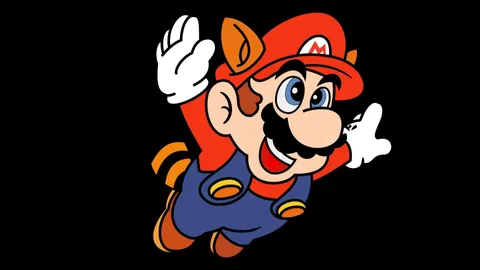
The Super Leaf transforms Mario into Raccoon Mario, granting a tail attack and the ability to build flight speed with a running charge. The Tanooki Suit adds a statue form that grants brief invincibility. The Frog Suit dramatically improves underwater control. The Hammer Bros. Suit lets Mario throw hammers. Each power-up reshapes how a level is approached, and the inventory system — allowing items collected in the overworld to be held for use in any level — gives players genuine preparation and strategy before each stage.
Super Mario Bros. 3 was a commercial phenomenon and a critical landmark. The GBA port, Super Mario Advance 4, scored 94 on Metacritic. It sits among the highest-ranked games on nearly every all-time list — #3 on Slant's, #11 on IGN's — and is regularly cited as the finest 2D Mario game and one of the greatest games ever made, its design principles still evident in every platform game that followed.