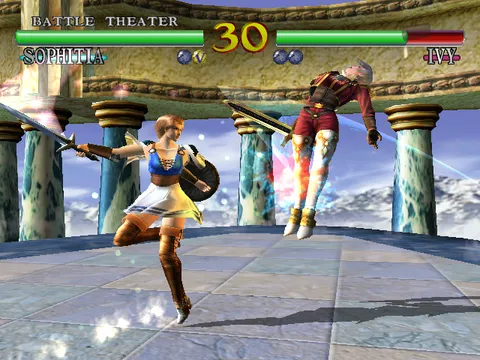
Soulcalibur is Namco's weapons-based 3D fighting game, first released in arcades in 1998 and expanded into a landmark 1999 Dreamcast launch-window showcase.
Soulcalibur follows Soul Edge by turning Namco's weapon fighter into one of the defining technical and design statements of the late 1990s arcade scene. Its cast fights with swords, staffs, axes, nunchaku, and stranger blades, giving each matchup a distinct rhythm built around spacing, ring position, and weapon reach.
The game's central innovation is the eight-way run, which lets fighters move freely around the 3D arena instead of stepping only along a narrow line. That mobility reshaped how sidesteps, ring outs, whiff punishment, and approach angles worked in a 3D fighter, making movement feel as important as memorizing command strings.
Its Dreamcast version became the best-known release, not just preserving the arcade game but expanding it with Mission Battle, unlockable art, extra characters, and home-console polish. The port's crisp animation, responsive controls, and strong presentation made it a showcase for Sega's final console.
Soulcalibur was met with unusually broad critical acclaim, including a 98 Metascore for Dreamcast, and it remains one of the most cited fighting games of its era. Its influence carried into the long-running Soulcalibur series and helped set expectations for what arcade conversions could look and feel like at home.