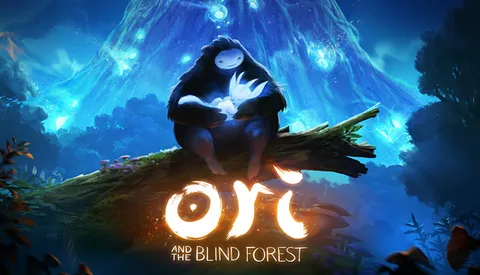
Ori and the Blind Forest is a hand-painted metroidvania platformer from Moon Studios and Microsoft Studios, following a forest spirit through the collapsing world of Nibel.
Ori and the Blind Forest is a side-scrolling action-adventure game developed by Moon Studios and published by Microsoft Studios. Released in 2015, it introduced Ori as a small guardian spirit trying to restore life to the forest of Nibel after a disaster leaves the land withering. The story is told with little dialogue, relying on animation, music, and environmental staging to give the journey the feel of an interactive fable.
The game combines precise platforming with metroidvania structure. Ori gradually earns movement and combat abilities that turn earlier obstacles into later routes: wall jumps, bash redirects, double jumps, and other skills make traversal faster and more expressive as the map opens up. Combat is comparatively light, but the checkpoint system gives players control over where to spend resources, tying survival and exploration together.
Its visual identity is central to its reputation. Lush painted backdrops, layered lighting, and fluid character animation make each region of Nibel feel distinct, from moonlit groves to volcanic ruins. Gareth Coker’s orchestral score gives the game much of its emotional weight, moving between quiet melancholy, momentum, and spectacle as Ori pushes deeper into the forest.
Ori and the Blind Forest was widely praised for its art direction, animation, music, and tightly tuned movement. It became one of 2015’s most decorated independent-style releases, winning visual art and audio honors from major industry awards and earning continued placement on all-time lists. Its success led to Ori and the Will of the Wisps, which expanded the same world with a broader combat system and larger environments.